Why Is My AC Freezing Up?
Ice on an evaporator coil or refrigerant line usually means the cooling system is operating under abnormal conditions. Restricted airflow, dirty coils, blower problems, refrigerant issues and other refrigeration faults are among the common possibilities.
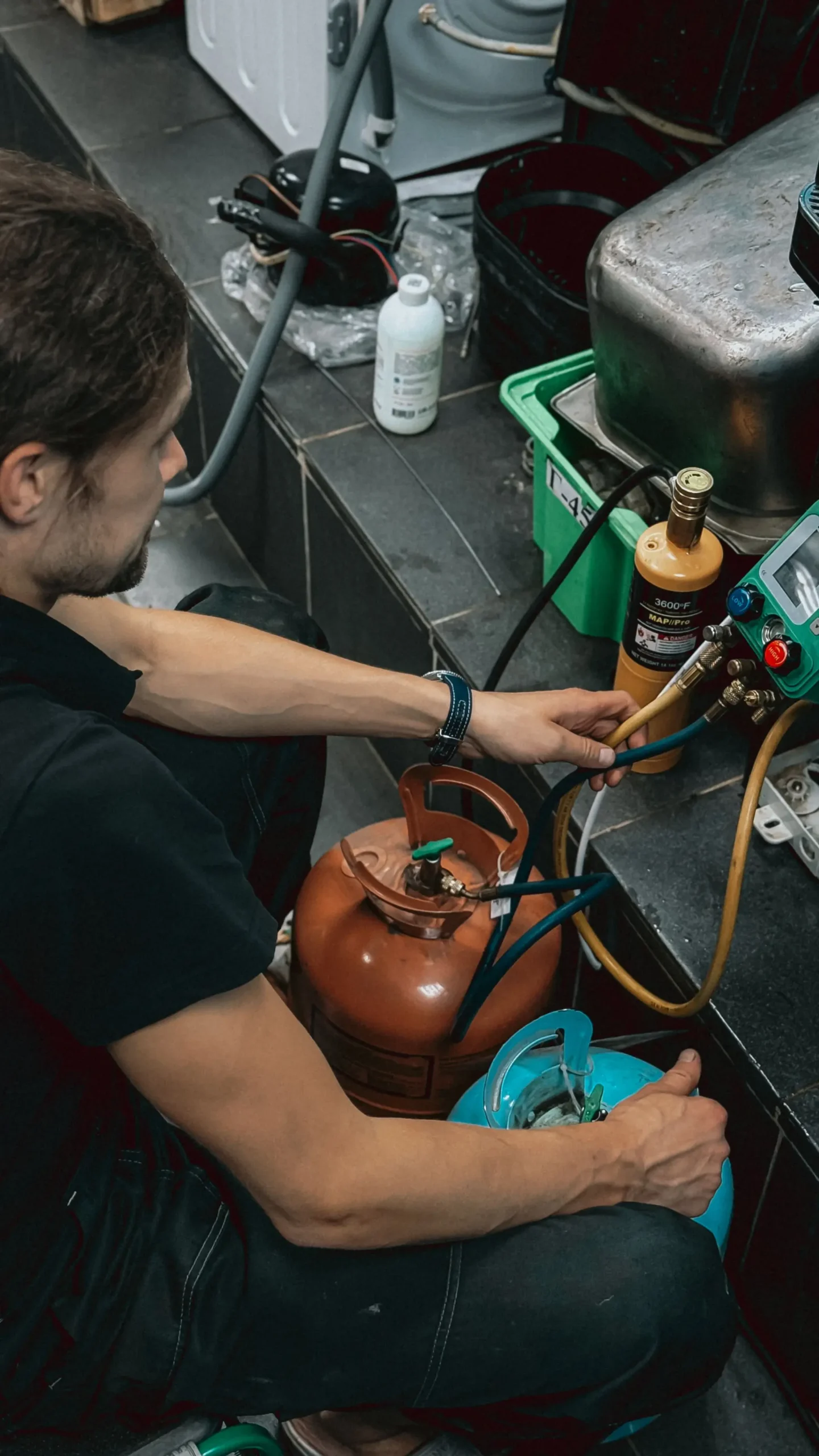
Ice on an air conditioner is not part of normal cooling operation.
If your symptom is different, return to the HVAC Problems troubleshooting hub to compare no cooling, warm air, short cycling, water leaks, thermostat problems and weak airflow.
The evaporator coil is supposed to absorb heat from indoor air. If coil temperature drops below the freezing point while moisture is present, frost or ice can develop.
As ice builds, airflow and heat transfer can become worse. What starts as reduced cooling can eventually turn into very weak airflow or an AC that appears to run without cooling the house effectively.
If the system is running but indoor temperature is not dropping, compare this symptom with our AC not cooling guide . If airflow is the biggest problem, continue to the weak airflow from vents guide .
The location of the ice can provide useful diagnostic context.
Frost or ice on the larger insulated line near the indoor or outdoor equipment can occur when evaporator conditions are abnormal.
A frozen evaporator can progressively restrict airflow, making cooling performance worse as ice continues to build.
A significant amount of meltwater can appear when a frozen coil thaws. Drainage condition and the source of the freezing problem both matter.
What causes an AC evaporator coil to freeze?
The most common diagnostic categories involve inadequate airflow across the coil or abnormal refrigeration-system conditions.
Dirty or Restricted Air Filter
A heavily loaded filter reduces airflow through the HVAC system. DOE notes that clogged filters restrict airflow and reduce cooling ability. Check your filter condition, and use the HVAC filter change calculator if you need a replacement-frequency starting point.
Dirty Evaporator Coil
Dirt on the evaporator can restrict airflow and interfere with heat transfer. DOE building-science guidance notes that substantial evaporator fouling can eventually cause a coil to freeze.
Blower or Airflow Problem
A weak blower, incorrect airflow, blocked return path or other distribution problem can reduce the amount of warm indoor air passing over the evaporator coil.
Closed or Restricted Airflow Paths
Severely restricted return airflow or distribution problems can contribute to poor coil airflow. If several rooms also have weak air movement, review the HVAC ductwork guide .
Refrigerant Charge or Leak Problem
Improper refrigerant charge or a leak can alter evaporator conditions and reduce cooling performance. If leakage is suspected, continue to refrigerant leak detection .
Refrigerant Metering or System Fault
Restrictions, metering-device problems and other refrigeration faults can create abnormal evaporator pressure and temperature conditions. These require proper HVAC diagnostic testing.
Very Low Cooling Load
Operating cooling equipment under conditions outside its normal design range can contribute to unusually low coil temperatures, depending on the system and controls.
Maintenance or Equipment Problems
Dirty components, damaged controls, airflow defects and neglected maintenance can interact rather than appearing as one isolated failure. Regular HVAC maintenance helps identify developing issues.
Do not treat the ice itself as the repair.
Removing visible ice does not correct the airflow or refrigeration problem that allowed the coil to freeze.
Basic homeowner checks
- Stop demanding normal cooling while significant ice is visible.
- Check whether the air filter is heavily restricted.
- Confirm return and supply vents are not obviously blocked.
- Note whether airflow became weaker before the ice appeared.
- Look for water around the indoor equipment as the ice melts.
Information useful for diagnosis
- Where the ice first appeared
- Whether the indoor blower was operating
- Whether the outdoor unit was operating
- Whether the filter was dirty
- Whether freezing returns after the system has thawed
Evaporator fins, tubing and refrigerant components can be damaged. If significant ice is present, allow the system to thaw rather than mechanically removing the ice. Recurring freezing needs diagnosis because thawing alone does not fix the underlying problem.
The cost depends on why the coil froze.
Use the AC repair cost calculator to compare preliminary costs across airflow, refrigerant, electrical and other repair categories.
Continue to the AC repair cost in Texas guide for broader repair-pricing factors.
If diagnosis reveals a costly failure, compare the scenarios with our HVAC repair vs replace calculator .
If the freezing returns after thawing or the cause is not obvious, review what normally falls under professional AC repair service .
Frozen coils often point back to airflow or refrigeration conditions.
U.S. Department of Energy
DOE's Home Cooling 101 guidance notes that clogged filters restrict airflow and reduce an air conditioner's ability to cool effectively. View DOE Home Cooling 101 .
ENERGY STAR Maintenance Checklist
ENERGY STAR recommends checking filters, evaporator and condenser coils, refrigerant level and blower components as part of cooling-system maintenance. View the maintenance checklist .
EPA Refrigerant Guidance
EPA advises homeowners to use technicians certified to handle refrigerants and recommends repairing refrigerant leaks rather than simply adding refrigerant repeatedly. Review EPA homeowner refrigerant guidance .
Need cost or sizing numbers after diagnosis?
Browse all free HVAC calculators and tools for repair costs, replacement costs, sizing, airflow, energy use and efficiency comparisons.
AC freezing again after thawing?
Request HVAC help and provide your Texas city or ZIP, where the ice appears, whether airflow is weak and what the system does before it freezes.