Why Is My AC Blowing Warm Air?
If air is coming from the vents but it feels warm, room-temperature or noticeably warmer than expected, start with thermostat settings and airflow before considering refrigerant, outdoor-unit or mechanical problems.
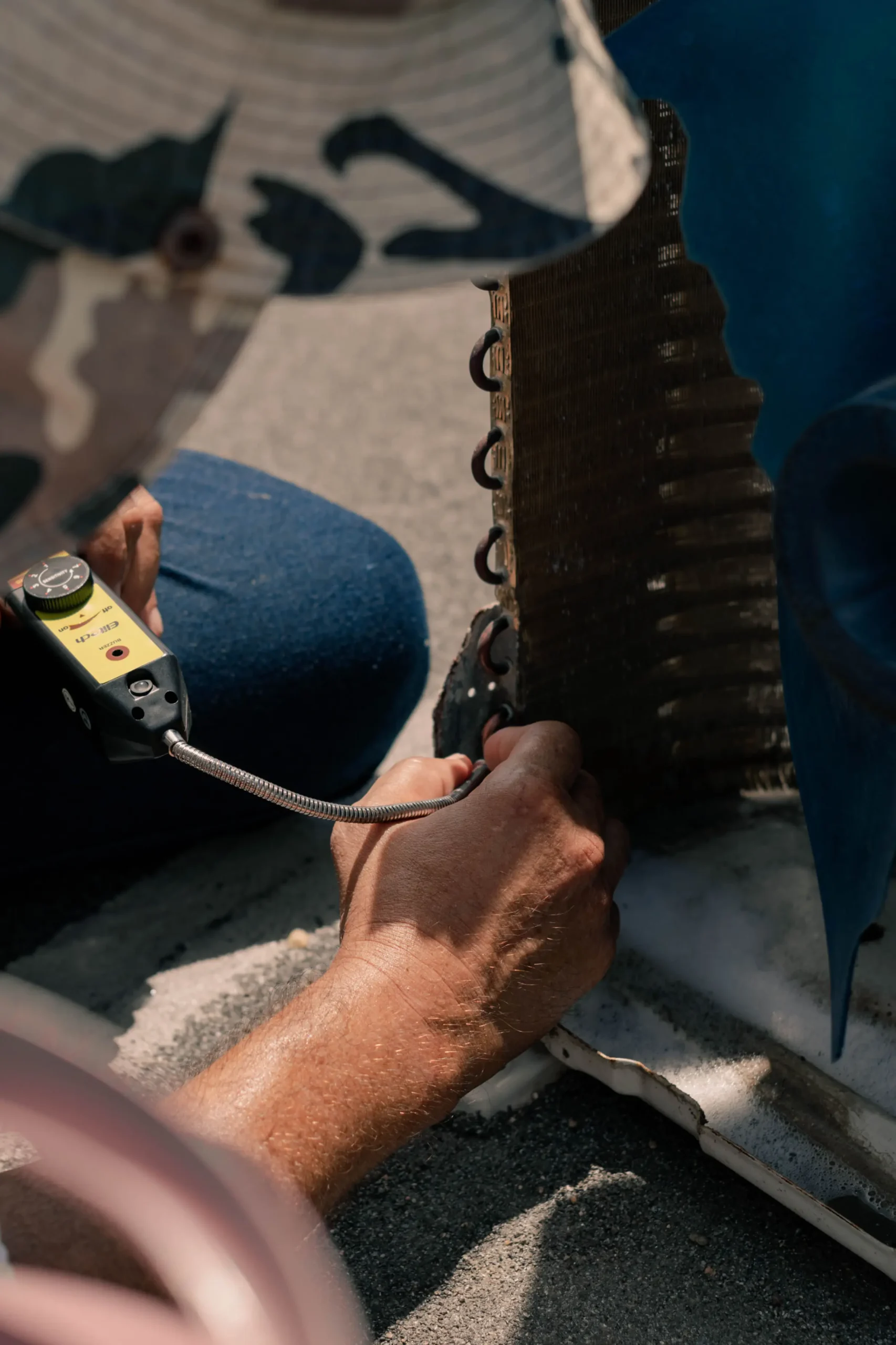
First decide whether the problem is warm air, weak airflow or insufficient cooling.
If this symptom does not match what your system is doing, return to the HVAC Problems troubleshooting hub to compare all common AC and HVAC symptoms.
An air conditioner can move plenty of air through the vents while failing to remove enough heat from the home. That is different from a system with very little airflow.
If vent airflow feels normal but the home simply does not reach the thermostat setting, compare this page with the broader AC not cooling troubleshooting guide .
If almost no air is reaching the rooms, the more useful diagnostic path may be weak airflow from HVAC vents instead.
Why can an AC suddenly start blowing warm air?
Several conditions can create this symptom. The vent temperature alone cannot identify the failed component.
Thermostat Mode or Setpoint
Confirm the thermostat is actually set to cooling mode and that the requested temperature is below the current indoor temperature. Incorrect thermostat settings can make a working HVAC system appear to have a cooling fault.
Thermostat Fan Set to ON
With some systems, setting the blower fan to ON keeps air moving even after the cooling cycle stops. Air from the vents may then feel warmer between compressor cycles. If controls appear unreliable, review the thermostat not working guide .
Outdoor Condenser Is Not Running
The indoor blower can sometimes move air even when the outdoor cooling equipment is not operating correctly. Electrical, control, motor or compressor problems are among the possibilities.
Dirty Filter or Restricted Airflow
A dirty filter can restrict airflow and reduce cooling performance. It can also contribute to conditions that promote evaporator-coil icing. Check the filter before assuming the problem is refrigerant-related.
Frozen Evaporator Coil
Ice on the indoor coil can interfere with heat transfer and eventually reduce both cooling and airflow. If ice is visible, compare symptoms with the AC freezing up troubleshooting guide .
Refrigerant Charge or Leak Problem
Too little or too much refrigerant can reduce system efficiency and cooling performance. Refrigerant work should be handled by qualified personnel. Learn more about AC refrigerant leak detection .
Dirty or Restricted Outdoor Coil
The condenser must reject heat outdoors. Heavy dirt, vegetation or debris around the unit can interfere with heat transfer and system performance.
Duct Leakage in a Hot Attic
Damaged or disconnected ductwork can lose conditioned air or pull hot attic air into the distribution system, potentially making supply air warmer before it reaches the rooms.
What exactly are you feeling at the vent?
Describing the symptom accurately can make troubleshooting much more useful.
Focus first on thermostat operation, outdoor-unit operation and whether the refrigeration cycle is actually running.
Filters, coils, blower operation, ducts or air distribution may deserve more attention than the refrigeration side.
System capacity, long runtime, duct losses, solar gain, insulation and overall building load may be part of the problem.
Do not open energized HVAC compartments, bypass controls, replace capacitors without appropriate qualifications or open the refrigerant circuit. Basic homeowner checks should stay limited to controls, filters, unobstructed vents and visible operating conditions.
Move from the symptom into repair cost and service decisions.
Use the AC repair cost calculator for a preliminary range based on the likely repair category.
Review the AC repair cost in Texas guide for the factors that can affect repair pricing.
Compare the financial scenarios with the HVAC repair vs replace calculator .
If professional diagnosis is needed, review what typically happens during AC repair service .
Filters, coils, refrigerant and airflow all affect cooling performance.
ENERGY STAR Maintenance Checklist
ENERGY STAR recommends checking thermostat settings, coils, refrigerant level, blower components and filters as part of cooling-system maintenance. View the maintenance checklist .
ENERGY STAR Heating & Cooling
ENERGY STAR notes that dirty filters slow airflow and that duct leakage can waste conditioned air before it reaches living spaces. Review heating and cooling guidance .
U.S. Department of Energy
DOE identifies refrigerant, thermostat and dirty-filter issues among common causes when an air conditioner does not cool properly. View DOE Home Cooling 101 .
Still getting warm air from the vents?
Request HVAC help and provide your Texas city or ZIP, what the thermostat is doing and whether the indoor and outdoor equipment appear to be operating.