Why Is My AC Making Noise?
Buzzing, rattling, grinding, banging, squealing and repeated clicking can point to very different HVAC problems. Start with what the sound resembles, where it comes from and when it happens.
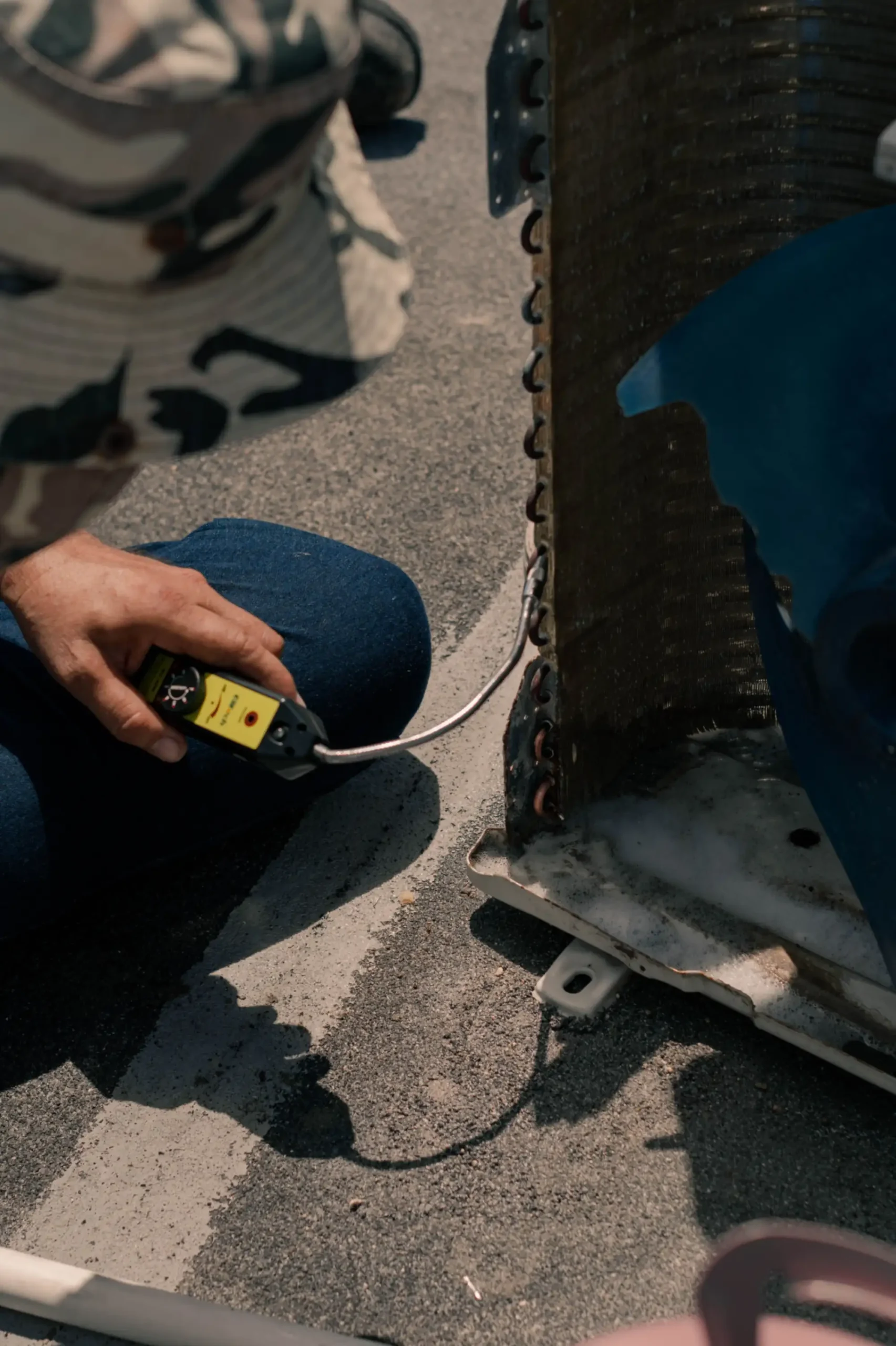
Start by separating a new abnormal noise from normal HVAC operation.
If noise is not the main problem, return to our HVAC Problems troubleshooting hub to compare cooling, airflow, water, thermostat and energy symptoms.
Air conditioners naturally make some sound as fans, compressors and air move through the system. What deserves more attention is a sound that is new, suddenly louder, mechanical, repetitive or accompanied by poor cooling.
A noisy system that is also failing to cool may have a different diagnostic path from an otherwise normal system with a loose panel or vibration. If cooling performance has dropped, compare the problem with the AC not cooling guide .
If the unit repeatedly starts and stops along with clicking or other startup sounds, also review our AC short cycling troubleshooting guide .
What does the air conditioner noise sound like?
Sounds can overlap, so treat these as diagnostic categories rather than proof that a specific component has failed.
Buzzing or Electrical Humming
Buzzing can involve electrical components, a motor, contactor, vibration or other equipment operation. Persistent loud buzzing, especially with poor startup, deserves diagnosis rather than repeated restart attempts.
Rattling or Vibrating
Loose panels, debris, mounting hardware, fan components and other mechanical vibration can create rattling sounds. A new rattle from the outdoor unit should be inspected before assuming it is harmless.
Grinding or Metal-on-Metal Sound
Grinding may indicate a motor, bearing, fan or other mechanical component is operating abnormally. Continuing to run equipment with a severe mechanical grinding sound may allow further damage.
Squealing or Screeching
High-pitched mechanical sounds can involve motors, bearings, belts on applicable equipment or fan components. The exact cause depends on the HVAC design.
Banging or Clanking
Banging or clanking can indicate loose or damaged moving components, fan contact, severe vibration or another mechanical problem. Shut the system down if the equipment appears to be striking itself.
Repeated Clicking
A click at startup or shutdown can be normal on some systems. Repeated clicking without successful startup can point toward control or electrical problems. If the AC will not start, use the AC not turning on guide .
Whistling or Air Rush
Whistling can be associated with airflow through a restriction, filter, grille or duct opening. If airflow is also weak, review the weak HVAC airflow guide .
Popping From Ductwork
Sheet-metal ducts can sometimes expand and contract as pressure and temperature change. Repeated severe popping, vibration or poor airflow may justify checking the HVAC ductwork system .
Location can narrow which HVAC components deserve attention.
Outdoor noises can involve the condenser fan, motor, compressor, electrical controls, cabinet vibration or debris near moving parts.
Indoor noises may involve the blower assembly, motor, cabinet, filter area, drainage or airflow through the duct system.
Whistling, popping, vibration or rattling from the distribution system can involve airflow, duct pressure, loose registers or sheet-metal movement.
What can you check without opening energized HVAC equipment?
Observe the system
- Determine whether the sound comes from indoors, outdoors or ductwork.
- Note whether the noise begins at startup, shutdown or during the full cooling cycle.
- Check whether the outdoor cabinet is visibly vibrating.
- Look for obvious loose debris around the outdoor unit without reaching into the equipment.
- Note whether cooling performance changed when the sound began.
Compare other symptoms
- Is airflow weaker than before?
- Is the AC taking longer to cool?
- Is the system starting and stopping repeatedly?
- Is the thermostat calling for cooling normally?
- Is there a burning smell, smoke or visible electrical damage?
Fan blades, motors, capacitors and other energized components can present serious hazards. A sound that requires opening the equipment for diagnosis should be left to qualified personnel.
Smoke, electrical arcing, strong burning odors, severe grinding, parts striking the cabinet or obvious equipment damage should not be treated as routine operating noise.
The cost depends on what is actually making the noise.
Use the AC repair cost calculator to compare preliminary ranges across motor, electrical, compressor and other repair categories.
Review our Texas AC repair cost guide for broader labor and component pricing factors.
If the sound is persistent, worsening or affecting cooling, review what normally falls under AC repair service .
Routine HVAC maintenance includes checking motors, electrical connections, moving parts, system controls and equipment operation before small problems become larger failures.
Motors, moving parts and electrical components all deserve attention during HVAC maintenance.
ENERGY STAR Maintenance Checklist
ENERGY STAR recommends checking electrical connections, motor voltage and current, moving-part lubrication, controls and system startup and shutdown during HVAC maintenance. View the maintenance checklist .
U.S. Department of Energy
DOE air-conditioner diagnostic guidance includes a noisy outdoor fan among observations that can indicate a need for HVAC service and further testing. Review DOE AC diagnostic guidance .
Carrier HVAC Guidance
Carrier lists grinding, banging and rattling from the outdoor condenser among signs that condenser components may need inspection. Review condenser troubleshooting guidance .
Need repair-cost numbers after the noise is diagnosed?
Browse our free HVAC calculators and tools for AC repair costs, replacement comparisons, energy use, equipment sizing and airflow calculations.
AC noise getting louder or affecting cooling?
Request HVAC help and provide your Texas city or ZIP, what the sound resembles, where it comes from and when it occurs.