AC Not Turning On?
If the thermostat is calling for cooling but nothing starts, the cause may involve thermostat power, a tripped circuit, condensate protection, controls, wiring, a failed motor or another electrical or mechanical problem.
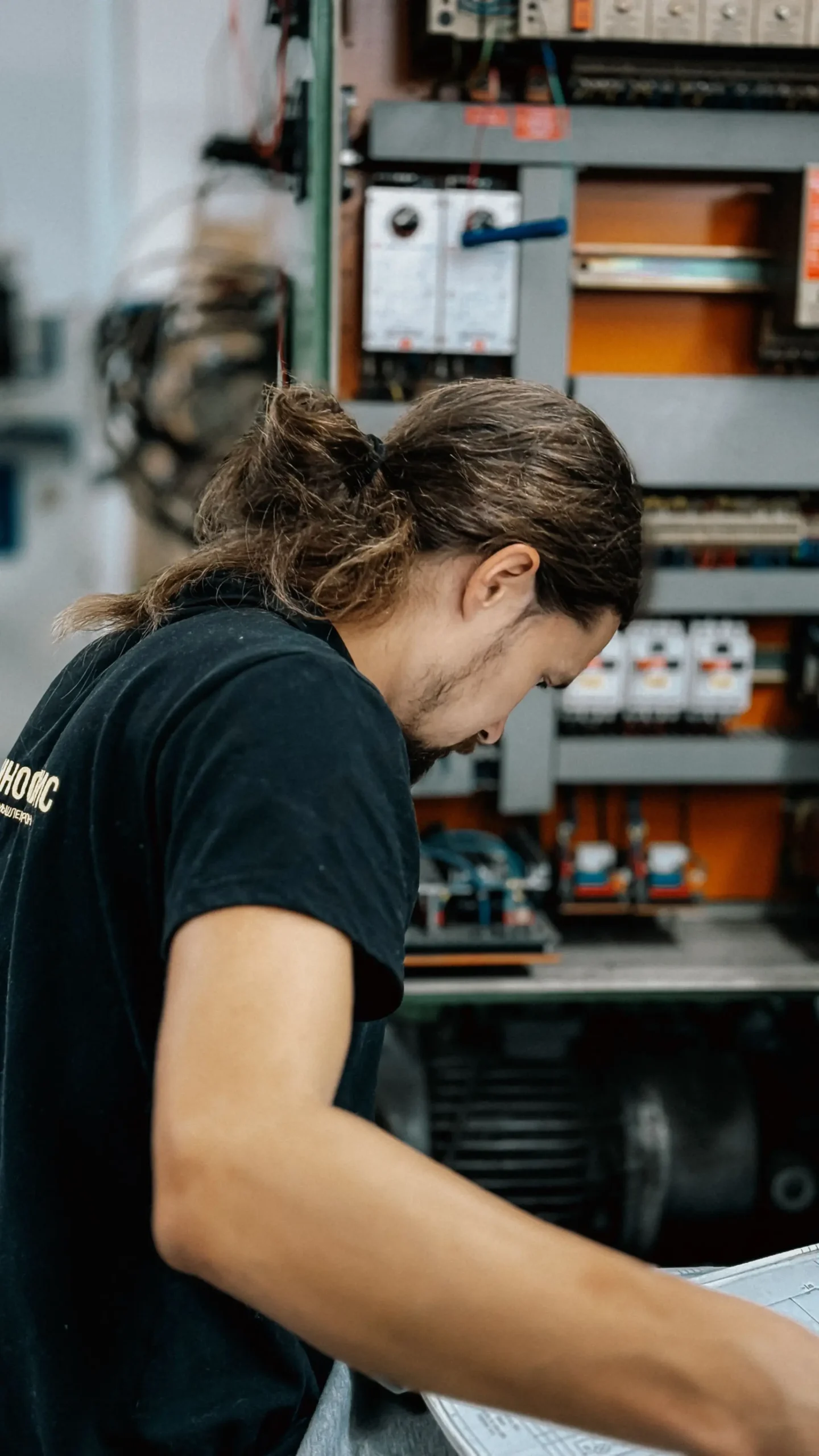
First identify which part of the HVAC system is actually not starting.
If this does not match your symptom, compare the other guides in our HVAC Problems troubleshooting hub .
“AC not turning on” can describe several different situations. The thermostat may be blank, the indoor blower may not run, the outdoor condenser may stay off, or the entire system may appear dead.
If the indoor blower is running but the outdoor unit is not, you may still feel room-temperature or warm air from the vents. Compare that symptom with the AC blowing warm air guide .
If the system does run but cannot lower the indoor temperature, use the AC not cooling troubleshooting guide instead.
Why would an air conditioner suddenly stop turning on?
A no-start condition can occur anywhere in the control, power or equipment startup sequence. These are possibilities, not a remote diagnosis.
Thermostat Setting or Power Problem
Confirm that cooling mode is selected and the setpoint is below the current room temperature. A blank or unresponsive thermostat can indicate a thermostat, battery, low-voltage power or HVAC control issue. Compare symptoms with the thermostat not working guide .
Tripped Circuit Breaker
Central HVAC equipment normally uses dedicated electrical circuits. A tripped breaker can prevent part or all of the system from starting. Repeatedly resetting a breaker that continues to trip is not a repair and can indicate an electrical or equipment fault.
Condensate Safety Switch
Some HVAC systems include a float or overflow safety switch designed to interrupt cooling operation when condensate backs up. Water near the air handler or drain pan can be an important clue.
Electrical Control Failure
Relays, contactors, capacitors, control boards, wiring and other electrical components participate in HVAC startup. Failure of one of these components can prevent a motor, compressor or complete system from starting.
Outdoor Unit Failure
The indoor blower may operate even when the outdoor condenser does not. Outdoor fan, compressor, electrical or control problems can leave the home without active cooling.
Indoor Blower or Air Handler Problem
If the indoor blower cannot start, conditioned air cannot be distributed normally. Motor, control, wiring or other equipment faults are among the possibilities.
Safety or Control Lockout
Some HVAC equipment can stop operation when a safety condition or control fault is detected. The correct diagnostic process depends on the equipment and manufacturer's controls.
Equipment Failure
Compressor, motor or other major equipment failures can also produce a no-start condition. Professional diagnosis is usually necessary before assuming a major component has failed.
What can you check without opening HVAC electrical equipment?
Keep homeowner troubleshooting limited to visible controls and normal user-accessible items. HVAC electrical diagnosis should be left to qualified personnel.
Confirm COOL mode, a cooling setpoint below room temperature and whether the thermostat display appears normal. Replace user-serviceable thermostat batteries if your thermostat uses them and they are depleted.
Without opening equipment panels, note whether the indoor blower or outdoor condenser attempts to start, makes an unusual sound or remains completely inactive.
Water around the indoor unit, condensate pan or drain area can suggest a drainage problem that may interact with an installed overflow safety switch.
You can visually check whether a clearly labeled HVAC or AC breaker is tripped without removing electrical covers. Do not repeatedly reset a breaker that trips again.
Although a dirty filter is more commonly associated with airflow and performance problems, routine filter inspection remains part of basic HVAC maintenance.
A power interruption, thunderstorm, water backup, unusual sound or repeated startup attempts can provide useful diagnostic context when requesting AC repair.
Do not keep resetting it. Repeated breaker trips can indicate an electrical fault or equipment problem that needs diagnosis.
Visible arcing, smoke, melted wiring, a strong burning odor or other immediate electrical hazards are not routine HVAC troubleshooting situations. Do not open the equipment or attempt an energized repair.
If the AC still will not start, move from troubleshooting to diagnosis.
The cost can differ substantially depending on whether the failure involves a thermostat, control, motor, electrical component or major equipment.
Use the AC repair cost calculator to compare preliminary repair ranges by problem category.
Continue to the AC repair cost in Texas guide for broader labor, component and repair-cost factors.
If diagnosis reveals a costly failure, use the HVAC repair vs replace calculator to compare the financial scenarios.
For professional troubleshooting, review what typically falls under AC repair service . Routine HVAC maintenance can also help identify developing electrical, control and operating problems before peak cooling season.
Thermostat operation, controls and electrical connections are part of proper HVAC startup.
U.S. Department of Energy
DOE's Home Cooling guidance identifies thermostat problems and electrical control failure among common reasons an air conditioner may fail to turn on. Review DOE Home Cooling 101 .
ENERGY STAR Maintenance Checklist
ENERGY STAR recommends checking thermostat settings, electrical connections, system controls and the equipment startup cycle during HVAC maintenance. View the ENERGY STAR checklist .
ENERGY STAR Heating & Cooling
ENERGY STAR recommends routine filter inspection and annual HVAC tune-ups to improve system operation, efficiency and reliability. Review ENERGY STAR HVAC guidance .
Need numbers after the diagnosis?
Browse our free HVAC calculators and tools for repair costs, replacement costs, efficiency, sizing, energy use and airflow calculations.
AC still will not turn on?
Request HVAC help and provide your Texas city or ZIP, whether the thermostat has power and whether the indoor or outdoor equipment attempts to start.