AC Running but Not Cooling?
If your air conditioner is running but the house is still warm, the cause could involve airflow, thermostat settings, frozen coils, refrigerant, dirty equipment, duct losses or a mechanical or electrical problem.
Start with the symptoms before assuming the AC needs replacement.
This page focuses specifically on an AC that is operating but failing to cool the home properly. If your symptoms are different, browse the full HVAC Problems troubleshooting hub .
“Not cooling” can mean different things. The vents may blow air that is not cold enough, airflow may be weak, some rooms may stay hot, or the thermostat may never reach the set temperature.
If the vents are clearly blowing warm air rather than simply failing to cool the home enough, compare the symptoms with our AC blowing warm air guide .
Weak airflow is also its own diagnostic path. If the air feels cold but very little is reaching the rooms, review common causes of weak airflow from HVAC vents .
Why would an AC run but fail to cool?
These are common possibilities, not a remote diagnosis. Several different HVAC faults can create similar symptoms.
Dirty or Restrictive Air Filter
A heavily loaded filter can reduce system airflow. That can reduce comfort and may contribute to coil icing or longer AC runtimes. Use the HVAC filter change calculator if you are unsure about replacement frequency.
Thermostat Problem
Incorrect mode, an inaccurate temperature reading, control problems or thermostat failure can prevent the cooling system from operating as expected. Compare the symptoms with the thermostat not working guide .
Frozen Indoor Coil
Ice on the evaporator coil or refrigerant line can reduce cooling and airflow. Restricted airflow and refrigeration problems are among the possible causes. Do not chip or pry ice from HVAC components.
Outdoor Unit Is Not Rejecting Heat Properly
The outdoor condenser has to release heat removed from the home. Dirt, blocked airflow, fan problems, electrical faults or compressor problems can interfere with cooling.
Refrigerant Problem
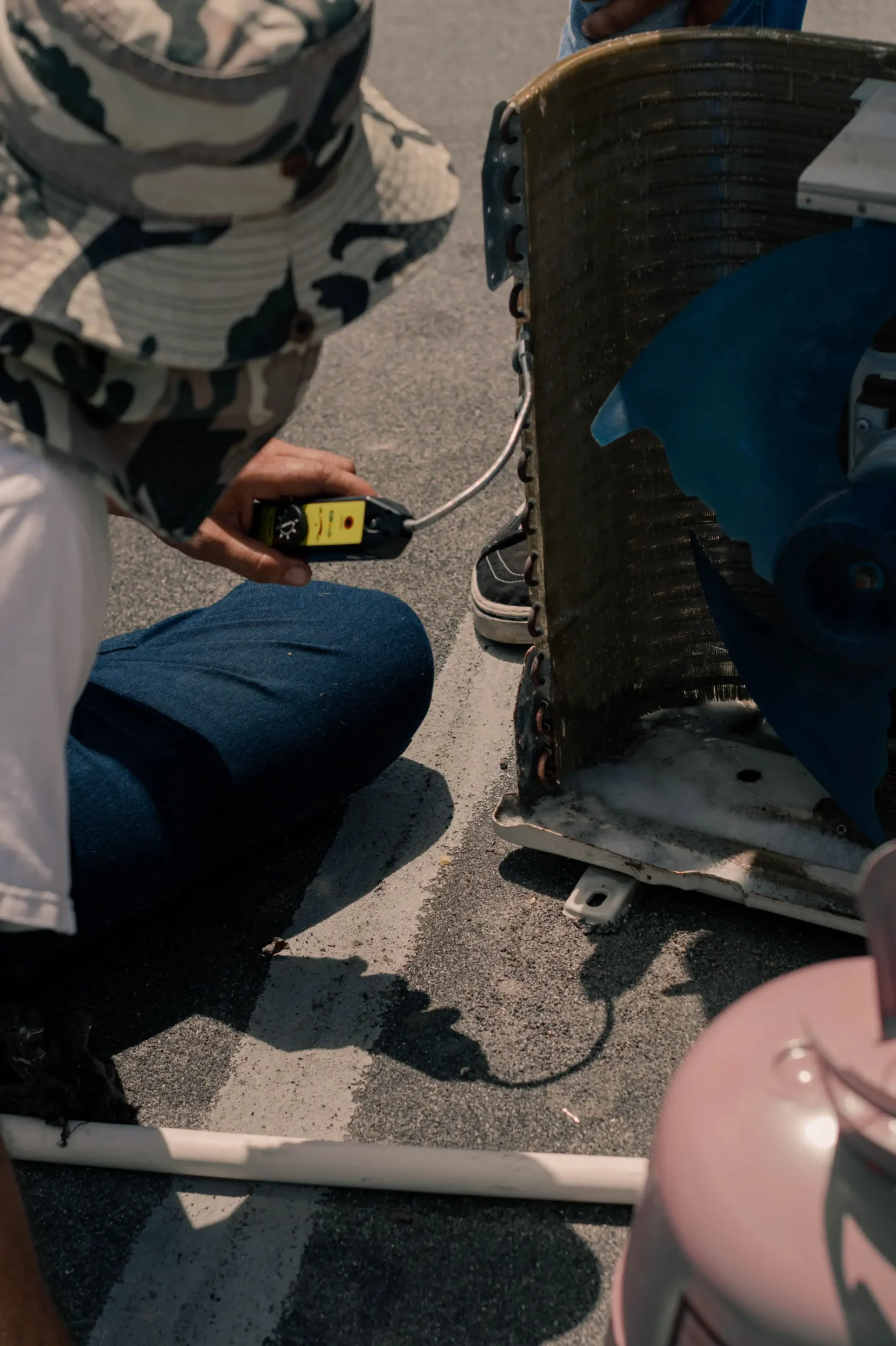
Incorrect refrigerant charge or a leak can reduce cooling performance. Refrigerant work should be handled by qualified personnel. Read more about refrigerant leak detection .
Duct Leakage or Air Distribution Problems
Cooled air can be lost before it reaches the rooms when ducts are damaged, disconnected or leaking in attics and other unconditioned spaces.
System Is Running Continuously
Long runtimes can occur during extreme weather, but they can also indicate poor heat removal, airflow problems or other operating issues. Persistent long runtimes may also contribute to an unusually high HVAC electric bill .
Capacity or Building-Load Mismatch
A home's cooling load depends on much more than square footage. Insulation, windows, air leakage, solar exposure, ducts and equipment sizing all affect whether indoor temperature can be maintained.
What can you check before requesting AC repair?
Keep homeowner troubleshooting limited to basic observations. Do not open refrigerant circuits, bypass electrical controls or work on energized HVAC components.
Start indoors
- Confirm the thermostat is set to cooling mode.
- Compare the thermostat reading with the actual indoor conditions.
- Inspect the air filter and replace it if it is visibly dirty and replacement is appropriate for your system.
- Confirm supply and return vents are not blocked by furniture or other objects.
- Note whether airflow is strong, weak or different between rooms.
Observe the equipment
- Note whether the indoor blower appears to be running.
- Observe whether the outdoor unit appears to be operating.
- Look for visible ice on accessible refrigerant lines or around the indoor coil area.
- Note unusual noises, water leakage or burning odors.
- Avoid opening electrical panels or attempting refrigerant repairs.
Continuing to demand cooling while significant ice is present may make troubleshooting more difficult. Do not break ice off components. If you are unsure how to safely shut down cooling operation, request HVAC help.
Once the cause is clearer, move to the next decision.
Troubleshooting is only the first step. Cost, system age, previous repairs and equipment condition can change what makes sense next.
Use the AC repair cost calculator for a preliminary cost range based on the type of issue.
Review our Texas AC repair cost guide for broader pricing factors and repair categories.
For older systems or expensive failures, use the HVAC repair vs replace calculator before assuming one option automatically makes more sense.
If the problem requires professional diagnosis, review what typically happens during AC repair service .
Cooling problems often overlap with airflow, maintenance and installation issues.
ENERGY STAR Maintenance Checklist
ENERGY STAR's HVAC maintenance guidance covers filters, coils, refrigerant charge, blower components and condensate drainage. View the ENERGY STAR checklist .
ENERGY STAR Quality Installation
Proper equipment sizing, airflow, refrigerant charge and duct performance all affect HVAC comfort and efficiency. Review HVAC installation guidance .
U.S. Department of Energy
DOE's home-cooling guidance lists common cooling problems such as filters, thermostat issues, refrigerant and drainage problems. View DOE home cooling guidance .
AC still not cooling?
Request HVAC help and provide your Texas city or ZIP, basic system information and what the AC is doing.