Thermostat Not Working?
A blank thermostat, inaccurate temperature reading, unresponsive controls or HVAC equipment that ignores the thermostat can involve batteries, power, settings, wiring, sensors, safety controls or the heating and cooling system itself.
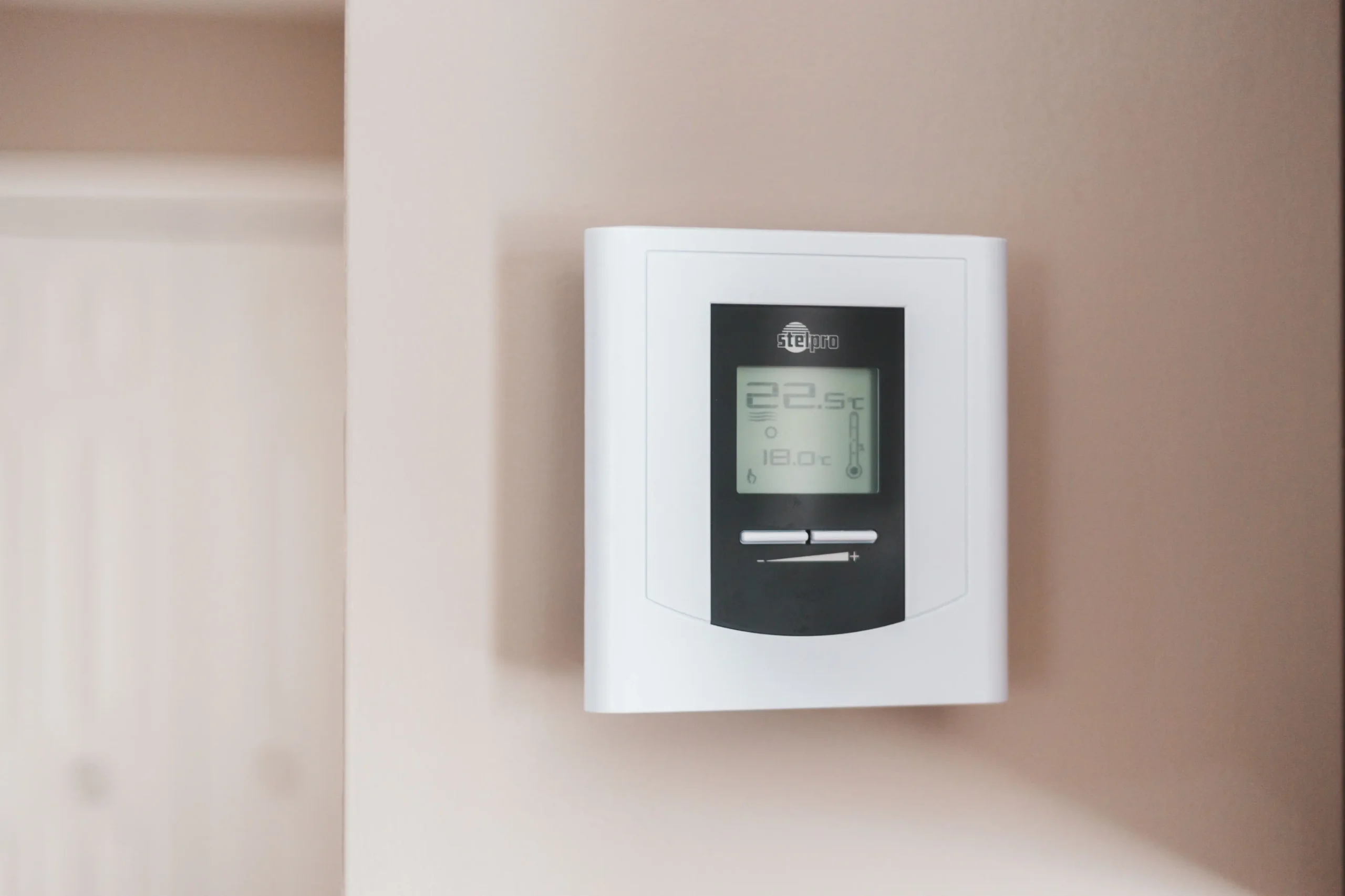
First identify exactly what the thermostat is doing wrong.
If your main symptom is not thermostat-related, return to the HVAC Problems troubleshooting hub to compare all common heating and cooling symptoms.
“Thermostat not working” can mean a completely blank screen, controls that do not respond, a temperature reading that seems wrong or HVAC equipment that never reacts to a heating or cooling request.
If the thermostat appears normal but the cooling equipment never starts, compare the symptoms with our AC not turning on troubleshooting guide .
If the system repeatedly starts and stops, thermostat behavior may be only one possibility. Review the AC short cycling guide as well.
Different thermostat problems point in different directions.
Check user-serviceable batteries if your model uses them, then consider thermostat power, HVAC control power or a safety switch as possible next diagnostic paths.
Incorrect mode, setpoint, scheduling, wiring, control communication or the HVAC equipment itself may be involved.
Thermostat placement, nearby heat sources, direct sunlight, airflow or sensor problems can affect the temperature the control sees.
Why would a thermostat stop controlling the HVAC system?
Thermostat symptoms can originate at the thermostat itself or elsewhere in the HVAC control and power system.
Incorrect Mode or Temperature Setting
Confirm the thermostat is set to the intended heating or cooling mode and that the setpoint actually calls for the system to operate. ENERGY STAR includes thermostat-setting verification in routine HVAC maintenance.
Depleted Thermostat Batteries
Some thermostats use replaceable batteries for primary or backup power. If your thermostat model uses user-replaceable batteries, depleted batteries are one of the simplest checks for a blank or unstable display.
Loss of HVAC Control Power
Many thermostats receive low-voltage power from the HVAC system. A control-power, transformer, fuse, wiring or equipment problem can therefore make the thermostat appear dead even when the thermostat itself is not the root cause.
Condensate Safety Switch
Some systems use a float or overflow switch that can interrupt HVAC operation when condensate backs up. If the thermostat stopped responding around the same time water appeared, compare symptoms with our AC leaking water guide .
Thermostat Wiring or Connection Problem
Loose, damaged or incorrectly connected low-voltage wiring can interfere with communication between the thermostat and HVAC equipment. Wiring diagnosis should be handled appropriately rather than guessed from wire colors alone.
Poor Thermostat Location
Nearby lamps, televisions, direct sunlight or unusual airflow can influence the temperature sensed by the thermostat. DOE notes that heat-producing devices near a thermostat can make an AC run longer than necessary.
Thermostat Sensor or Control Failure
Internal sensor, relay, display or control electronics can fail over time. Diagnosis is more convincing after settings, power and external HVAC controls have been checked first.
HVAC Equipment Problem, Not the Thermostat
A normal thermostat can call for cooling while a failed contactor, motor, board, compressor or other HVAC component prevents the equipment from responding.
What can you check before replacing the thermostat?
Check the thermostat first
- Confirm the system mode is set correctly.
- Set cooling below the current room temperature when testing cooling.
- Check whether the display is powered and responsive.
- Replace batteries if the model uses user-replaceable batteries and they are depleted.
- Check for unexpected schedules, holds or energy-saving modes.
Observe the HVAC response
- Note whether the indoor blower starts.
- Note whether the outdoor equipment starts.
- Look for water around the indoor HVAC equipment.
- Record whether the thermostat repeatedly restarts.
- Compare its temperature reading with another reliable indoor thermometer.
Control-power loss, wiring, condensate safety switches and HVAC equipment failures can all make a functioning thermostat appear defective.
Thermostat circuits are connected to HVAC electrical and control systems. If diagnosis requires opening equipment, testing wiring or accessing energized components, use qualified HVAC or electrical help.
A thermostat problem can sometimes look like an AC performance problem.
If the thermostat continuously calls for cooling because of its reading, placement or settings, the system can run longer than expected. Compare persistent runtime problems with the AC keeps running guide and unusually high costs with the HVAC high electric bill guide .
Once the cause is clear, choose the right thermostat path.
If the existing control or wiring can be corrected, review the thermostat repair service guide .
If replacement makes more sense, continue to thermostat installation for replacement and upgrade considerations.
Compare scheduling and temperature adjustments with our thermostat savings calculator or estimate upgrade payback with the smart thermostat ROI calculator .
Routine HVAC maintenance should include checking thermostat settings, controls and proper equipment startup and shutdown.
Thermostat settings, placement and controls affect HVAC operation.
ENERGY STAR Maintenance Checklist
ENERGY STAR recommends checking thermostat settings and system controls and confirming that HVAC equipment starts, operates and shuts off properly. View the maintenance checklist .
U.S. Department of Energy
DOE warns that heat-producing appliances near a thermostat can affect its reading and cause an air conditioner to run longer than necessary. Review DOE cooling guidance .
ENERGY STAR Smart Thermostats
ENERGY STAR certified smart thermostats are independently evaluated using field data for energy savings and can automatically adjust heating and cooling settings. Explore smart thermostat guidance .
Comparing thermostat costs or savings?
Browse all free HVAC calculators and tools for thermostat savings, smart thermostat ROI, repair costs, HVAC energy use, sizing and airflow calculations.
Thermostat still not controlling the HVAC system?
Request HVAC help and provide your Texas city or ZIP, whether the thermostat screen has power and what the heating or cooling equipment does when you change the setpoint.
Common thermostat troubleshooting questions.
Why is my thermostat screen blank?
Possible causes include depleted batteries on models that use them, loss of HVAC control power, wiring problems, a blown low-voltage fuse, condensate safety controls or thermostat failure.
Why does the thermostat work but the AC does not turn on?
The thermostat can call for cooling while an electrical, control, motor, outdoor-unit or other HVAC problem prevents the equipment from responding.
Why is my thermostat showing the wrong temperature?
Placement, nearby lamps or electronics, sunlight, airflow and sensor problems can affect the temperature sensed at the thermostat.
Can a thermostat cause AC short cycling?
Thermostat location, inaccurate sensing or control problems can affect cycling, although airflow, refrigeration, electrical and equipment-sizing issues can produce similar symptoms.
Can a clogged AC drain make the thermostat go blank?
Some HVAC installations use a condensate overflow switch that can interrupt HVAC control operation when water backs up. The exact behavior depends on the system and wiring.
Should I replace my thermostat if it stops working?
Not automatically. Confirm settings, batteries where applicable, HVAC power and other control problems before assuming the thermostat itself has failed.
Can thermostat location increase my cooling bill?
Yes. DOE notes that heat-producing appliances near a thermostat can make an air conditioner run longer than necessary because the thermostat senses their heat.
Is a smart thermostat worth upgrading to?
It depends on your HVAC system, schedule, current thermostat and how you use temperature setbacks. Use our smart thermostat ROI calculator to compare estimated savings with upgrade cost.
Return to the HVAC Problems hub to compare AC not cooling, no startup, short cycling, freezing, leaks, noises, odors and weak airflow.